BIODIESEL AT THE CROSSROADS OF CLEAN ENERGY AND CANCER PREVENTION: A DOUBLE-EDGED SWORD IN SUSTAINABLE TRANSPORT
DOI:
https://doi.org/10.46754/ps.2025.07.002Keywords:
Air pollution, carcinogenesis, biodiesel, emissions, public healthAbstract
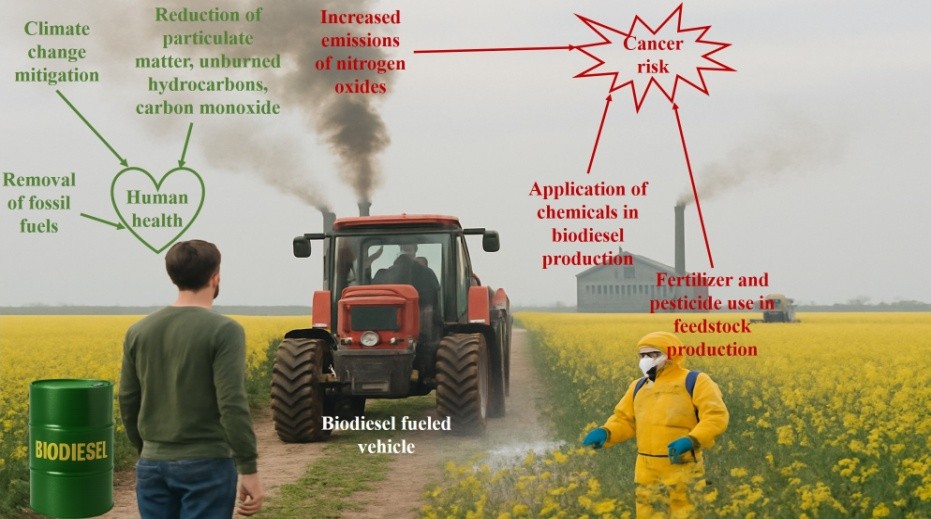
Air pollution is a major environmental risk factor for cancer, driven in part by emissions from the transportation sector. Biodiesel, a renewable alternative to petrodiesel, has emerged as a promising strategy to reduce toxic emissions from diesel engines. This review critically examines the relationship between biodiesel use and cancer risk, evaluating its impact across key pollutants including particulate matter (PM), unburned hydrocarbons (UHCs), carbon monoxide (CO), and nitrogen oxides (NOₓ). Biodiesel combustion generally results in lower emissions of PM, UHCs, and CO, pollutants known to induce DNA damage, oxidative stress, and chronic inflammation, all of which contribute to carcinogenesis. These benefits are largely attributed to biodiesel’s intrinsic oxygen content, absence of aromatic compounds, and higher cetane number, which collectively promote more complete combustion. However, biodiesel is consistently associated with increased NOₓ emissions, which can lead to secondary carcinogenic pollutants like ozone and PAHs. Additionally, potential cancer risks may arise during biodiesel production and processing. The paper concludes that while biodiesel significantly improves air quality and reduces several cancer-related exposures, optimizing its formulation and combustion conditions is essential to minimize unintended health trade-offs. Biodiesel thus represents both an opportunity and a challenge in the broader effort to achieve cleaner energy and cancer prevention.
References
Adi, G., Hall, C., Snyder, D., Bunce, M., Satkoski, C., Kumar, S., Garimella, P., Stanton, D., & Shaver, G. (2009). Soy-Biodiesel Impact on NO x Emissions and Fuel Economy for Diffusion-Dominated Combustion in a Turbo- Diesel Engine Incorporating Exhaust Gas Recirculation and Common Rail Fuel Injection. Energy & Fuels, 23(12), 5821–5829. https://doi.org/10.1021/ef9006609 DOI: https://doi.org/10.1021/ef9006609
Agarwal, A. K., Gupta, T., Shukla, P. C., & Dhar, A. (2015). Particulate emissions from biodiesel fuelled CI engines. Energy Conversion and Management, 94, 311–330. https://doi.org/10.1016/j.enconman.2014.12.094 DOI: https://doi.org/10.1016/j.enconman.2014.12.094
Agarwal, D., Sinha, S., & Agarwal, A. K. (2006). Experimental investigation of control of NOx emissions in biodiesel-fueled compression ignition engine. Renewable Energy, 31(14), 2356–2369 https://doi.org/10.1016/j.renene.2005.12.003. DOI: https://doi.org/10.1016/j.renene.2005.12.003
Aghbashlo, M., Peng, W., Tabatabaei, M., Kalogirou, S. A., Soltanian, S., Hosseinzadeh-Bandbafha, H., Mahian, O., & Lam, S. S. (2021). Machine learning technology in biodiesel research: A review. Progress in Energy and Combustion Science, 85, 100904. https://doi.org/10.1016/j.pecs.2021.100904 DOI: https://doi.org/10.1016/j.pecs.2021.100904
Al-lwayzy, S. H., & Yusaf, T. (2017). Diesel engine performance and exhaust gas emissions using Microalgae Chlorella protothecoides biodiesel. Renewable Energy, 101, 690–701. https://doi.org/10.1016/j.renene.2016.09.035 DOI: https://doi.org/10.1016/j.renene.2016.09.035
Aldhaidhawi, M., Chiriac, R., & Badescu, V. (2017). Ignition delay, combustion and emission characteristics of Diesel engine fueled with rapeseed biodiesel-A literature review. Renewable and Sustainable Energy Reviews, 73, 178–186. Retrieved from https://doi.org/10.1016/j.rser.2017.01.129 DOI: https://doi.org/10.1016/j.rser.2017.01.129
AlDosari, S. M., Banawas, S., Ghafour, H. S., Tlili, I., & Le, Q. H. (2023). Drug release using nanoparticles in the cancer cells on 2-D materials in order to target drug delivery: A numerical simulation via molecular dynamics method. Engineering Analysis with Boundary Elements, 148, 34–40. https://doi.org/10.1016/j.enganabound.2022.12.020 DOI: https://doi.org/10.1016/j.enganabound.2022.12.020
Altaie, M. A. H., Janius, R. B., Rashid, U., Taufiq-Yap, Y. H., Yunus, R., Zakaria, R., & Adam, N. M. (2015). Performance and exhaust emission characteristics of direct-injection diesel engine fueled with enriched biodiesel. Energy Conversion and Management, 106, 365–372. https://doi.org/10.1016/j.enconman.2015.09.050 DOI: https://doi.org/10.1016/j.enconman.2015.09.050
Ban-Weiss, G. A., Chen, J. Y., Buchholz, B. A., & Dibble, R. W. (2007). A numerical investigation into the anomalous slight NO x increase when burning biodiesel; a new (old) theory. Fuel Processing Technology, 88(7), 659–667. https://doi.org/10.1016/j.fuproc.2007.01.007 DOI: https://doi.org/10.1016/j.fuproc.2007.01.007
Bonfiglio, R., Scimeca, M., & Mauriello, A. (2023). The impact of environmental pollution on cancer: Risk mitigation strategies to consider. Science of The Total Environment, 902, 166219. https://doi.org/10.1016/j.scitotenv.2023.166219 DOI: https://doi.org/10.1016/j.scitotenv.2023.166219
Bueno, A. V., Pereira, M. P. B., de Oliveira Pontes, J. V., de Luna, F. M. T., & Cavalcante Jr, C. L. (2017). Performance and emissions characteristics of castor oil biodiesel fuel blends. Applied Thermal Engineering, 125, 559–566. https://doi.org/10.1016/j.applthermaleng.2017.06.114 DOI: https://doi.org/10.1016/j.applthermaleng.2017.06.114
Chen, H., Xie, B., Ma, J., & Chen, Y. (2018). NOx emission of biodiesel compared to diesel: Higher or lower? Applied Thermal Engineering, 137, 584–593. https://doi.org/10.1016/j.applthermaleng.2018.04.022 DOI: https://doi.org/10.1016/j.applthermaleng.2018.04.022
Cheng, I., Tseng, C., Wu, J., Yang, J., Conroy, S. M., Shariff Marco, S., Li, L., Hertz, A., Gomez, S. L., & Le Marchand, L. (2020). Association between ambient air pollution and breast cancer risk: the multiethnic cohort study. International Journal of Cancer, 146(3), 699–711. https://doi.org/10.1002/ijc.32308 DOI: https://doi.org/10.1002/ijc.32308
Demirbas, A. (2007). Importance of biodiesel as transportation fuel. Energy Policy, 35(9), 4661–4670. https://doi.org/10.1016/j.enpol.2007.04.003 DOI: https://doi.org/10.1016/j.enpol.2007.04.003
Dhamodaran, G., Esakkimuthu, G. S., Palani, T., & Sundaraganesan, A. (2023). Reducing gasoline engine emissions using novel bio-based oxygenates: A review. Emergent Materials, 6(5), 1393–1413. https://doi.org/10.1007/s42247-023-00470-7 DOI: https://doi.org/10.1007/s42247-023-00470-7
Dhamodaran, G., Krishnan, R., Pochareddy, Y. K., Pyarelal, H. M., Sivasubramanian, H., & Ganeshram, A. K. (2017). A comparative study of combustion, emission, and performance characteristics of rice-bran-, neem-, and cottonseed-oil biodiesels with varying degree of unsaturation. Fuel, 187, 296–305. https://doi.org/10.1016/j.fuel.2016.09.062 DOI: https://doi.org/10.1016/j.fuel.2016.09.062
Dhital, N. B., Wang, S.-X., Lee, C.-H., Su, J., Tsai, M.-Y., Jhou, Y.-J., & Yang, H.-H. (2021). Effects of driving behavior on real-world emissions of particulate matter, gaseous pollutants and particle-bound PAHs for diesel trucks. Environmental Pollution, 286, 117292. https://doi.org/10.1016/j.envpol.2021.117292 DOI: https://doi.org/10.1016/j.envpol.2021.117292
Ebi, K. L., & McGregor, G. (2008). Climate change, tropospheric ozone and particulate matter, and health impacts. Environmental Health Perspectives, 116(11), 1449–1455. https://doi.org/10.1289/ehp.11463 DOI: https://doi.org/10.1289/ehp.11463
Elling, J. (2001). Biodiesel Offers Fleets a Better Alternative to Petroleum Diesel: Clean Cities Technical Assistance Fact Sheet. National Renewable Energy Lab.(NREL), Golden, CO (United States).
Espina, C., Feliu, A., Maza, M., Almonte, M., Ferreccio, C., Finck, C., Herrero, R., Dommarco, J. R., de Almeida, L. M., & Arrossi, S. (2023). Latin America and the Caribbean Code Against Cancer 1st Edition: 17 cancer prevention recommendations to the public and to policy-makers (World Code Against Cancer Framework). Cancer Epidemiology, 86, 102402. https://doi.org/10.1016/j.canep.2023.102402 DOI: https://doi.org/10.1016/j.canep.2023.102402
Fattah, I. M. R., Masjuki, H. H., Kalam, M. A., Mofijur, M., & Abedin, M. J. (2014). Effect of antioxidant on the performance and emission characteristics of a diesel engine fueled with palm biodiesel blends. Energy Conversion and Management, 79, 265–272. https://doi.org/10.1016/j.enconman.2013.12.024 DOI: https://doi.org/10.1016/j.enconman.2013.12.024
Geng, P., Yao, C., Wei, L., Liu, J., Wang, Q., Pan, W., & Wang, J. (2014). Reduction of PM emissions from a heavy-duty diesel engine with diesel/methanol dual fuel. Fuel, 123, 1–11. https://doi.org/10.1016/j.fuel.2014.01.056 DOI: https://doi.org/10.1016/j.fuel.2014.01.056
Giakoumis, E. G., Rakopoulos, C. D., Dimaratos, A. M., & Rakopoulos, D. C. (2012). Exhaust emissions of diesel engines operating under transient conditions with biodiesel fuel blends. Progress in Energy and Combustion Science, 38(5), 691–715. https://doi.org/10.1016/j.pecs.2012.05.002 DOI: https://doi.org/10.1016/j.pecs.2012.05.002
Graboski, M. S., McCormick, R. L., Alleman, T. L., & Herring, A. M. (2003). The effect of biodiesel composition on engine emissions from a DDC series 60 diesel engine. In National Renewable Energy Laboratory (Report No: NREL/SR-510-31461). National Renewable Energy Laboratory (Report No: NREL/SR-510-31461). DOI: https://doi.org/10.2172/15003583
Hoekman, S. K., & Robbins, C. (2012). Review of the effects of biodiesel on NOx emissions. Fuel Processing Technology, 96, 237–249. https://doi.org/10.1016/j.fuproc.2011.12.036 DOI: https://doi.org/10.1016/j.fuproc.2011.12.036
Hosseinzadeh-Bandbafha, H., Tabatabaei, M., Aghbashlo, M., Khanali, M., & Demirbas, A. (2018). A comprehensive review on the environmental impacts of diesel/biodiesel additives. Energy Conversion and Management, 174, 579–614. https://doi.org/10.1016/j.enconman.2018.08.050 DOI: https://doi.org/10.1016/j.enconman.2018.08.050
Jacob, A., Ashok, B., Alagumalai, A., Chyuan, O. H., & Le, P. T. K. (2021). Critical review on third generation micro algae biodiesel production and its feasibility as future bioenergy for IC engine applications. Energy Conversion and Management, 228, 113655. https://doi.org/10.1016/j.enconman.2020.113655 DOI: https://doi.org/10.1016/j.enconman.2020.113655
Kebede, L., Tulu, G. S., & Lisinge, R. T. (2022). Diesel-fueled public transport vehicles and air pollution in Addis Ababa, Ethiopia: Effects of vehicle size, age and kilometers travelled. Atmospheric Environment: X, 13, 100144. https://doi.org/10.1016/j.aeaoa.2021.100144 DOI: https://doi.org/10.1016/j.aeaoa.2021.100144
Khalife, E., Tabatabaei, M., Demirbas, A., & Aghbashlo, M. (2017). Impacts of additives on performance and emission characteristics of diesel engines during steady state operation. Progress in Energy and Combustion Science, 59, 32–78. https://doi.org/10.1016/j.pecs.2016.10.001 DOI: https://doi.org/10.1016/j.pecs.2016.10.001
Kiehbadroudinezhad, M., Hosseinzadeh-Bandbafha, H., Pan, J., Peng, W., Wang, Y., Aghbashlo, M., & Tabatabaei, M. (2023). The potential of aquatic weed as a resource for sustainable bioenergy sources and bioproducts production. Energy, 278, 127871. https://doi.org/10.1016/j.energy.2023.127871 DOI: https://doi.org/10.1016/j.energy.2023.127871
Kiehbadroudinezhad, M., Merabet, A., & Hosseinzadeh-Bandbafha, H. (2023). A life cycle assessment perspective on biodiesel production from fish wastes for green microgrids in a circular bioeconomy. Bioresource Technology Reports, 21, 101303. https://doi.org/10.1016/j.biteb.2022.101303 DOI: https://doi.org/10.1016/j.biteb.2022.101303
Korsiak, J., Pinault, L., Christidis, T., Burnett, R. T., Abrahamowicz, M., & Weichenthal, S. (2022). Long-term exposure to wildfires and cancer incidence in Canada: a population-based observational cohort study. The Lancet Planetary Health, 6(5), e400–e409. https://www.thelancet.com/journals/lanplh/article/PIIS2542-5196(22)00067-5/fulltext# DOI: https://doi.org/10.1016/S2542-5196(22)00067-5
Kousoulidou, M., Ntziachristos, L., Mellios, G., & Samaras, Z. (2008). Road-transport emission projections to 2020 in European urban environments. Atmospheric Environment, 42(32), 7465–7475. https://doi.org/10.1016/j.atmosenv.2008.06.002 DOI: https://doi.org/10.1016/j.atmosenv.2008.06.002
Kumar, D., & Singh, B. (2020). Effect of winterization and plant phenolic-additives on the cold-flow properties and oxidative stability of Karanja biodiesel. Fuel, 262, 116631. https://doi.org/10.1016/j.fuel.2019.116631 DOI: https://doi.org/10.1016/j.fuel.2019.116631
Kumar, N., Varun, & Chauhan, S. R. (2013). Performance and emission characteristics of biodiesel from different origins: A review. Renewable and Sustainable Energy Reviews, 21, 633–658. https://doi: 10.1016/j.rser.2013.01.006 DOI: https://doi.org/10.1016/j.rser.2013.01.006
Kumar, R. P., Kashyap, P., Kumar, R., Pandey, A. K., Kumar, A., & Kumar, K. (2020). Cancer and non-cancer health risk assessment associated with exposure to non-methane hydrocarbons among roadside vendors in Delhi, India. Human and Ecological Risk Assessment: An International Journal, 26(5), 1285–1299. https://doi.org/10.1080/10807039.2019.1570077 DOI: https://doi.org/10.1080/10807039.2019.1570077
Kwanchareon, P., Luengnaruemitchai, A., & Jai-In, S. (2007). Solubility of a diesel–biodiesel–ethanol blend, its fuel properties, and its emission characteristics from diesel engine. Fuel, 86(7–8), 1053–1061. https://doi.org/10.1016/j.fuel.2006.09.034 DOI: https://doi.org/10.1016/j.fuel.2006.09.034
Larrea Valdivia, A. E., Reyes Larico, J. A., Salcedo Peña, J., & Wannaz, E. D. (2020). Health risk assessment of polycyclic aromatic hydrocarbons (PAHs) adsorbed in PM 2.5 and PM 10 in a region of Arequipa, Peru. Environmental Science and Pollution Research, 27, 3065–3075. https://doi.org/10.1007/s11356-019-07185-5 DOI: https://doi.org/10.1007/s11356-019-07185-5
Leng, L., Li, H., Yuan, X., Zhou, W., & Huang, H. (2018). Bio-oil upgrading by emulsification/microemulsification: a review. Energy, 161, 214–232. https://doi.org/10.1016/j.energy.2018.07.117 DOI: https://doi.org/10.1016/j.energy.2018.07.117
Li, J., Wang, T., Wang, Y., Xu, M., Zhang, L., Li, X., Liu, Z., Gao, S., Jia, Q., & Fan, Y. (2020). Particulate matter air pollution and the expression of microRNAs and pro-inflammatory genes: association and mediation among children in Jinan, China. Journal of Hazardous Materials, 389, 121843. https://doi.org/10.1016/j.jhazmat.2019.121843 DOI: https://doi.org/10.1016/j.jhazmat.2019.121843
Liang, H., Zhou, X., Zhu, Y., Li, D., Jing, D., Su, X., Pan, P., Liu, H., & Zhang, Y. (2023). Association of outdoor air pollution, lifestyle, genetic factors with the risk of lung cancer: A prospective cohort study. Environmental Research, 218, 114996. https://doi.org/10.1016/j.envres.2022.114996 DOI: https://doi.org/10.1016/j.envres.2022.114996
Liaw, Y.-P., Ting, T.-F., Ho, K.-K., & Yang, C.-F. (2008). Cell type specificity of lung cancer associated with air pollution. Science of the Total Environment, 395(1), 23–27. https://doi.org/10.1016/j.scitotenv.2008.01.053 DOI: https://doi.org/10.1016/j.scitotenv.2008.01.053
Mack, S. M., Madl, A. K., & Pinkerton, K. E. (2020). Respiratory health effects of exposure to ambient particulate matter and bioaerosols. Comprehensive Physiology, 10(1), 1–20. https://doi.org/10.1002/j.2040-4603.2020.tb00103.x DOI: https://doi.org/10.1002/j.2040-4603.2020.tb00103.x
Madsen, R., Larsen, P., Carlsen, A. M. F., & Marcussen, J. (2023). Nursing care and nurses’ understandings of grief and bereavement among patients and families during cancer illness and death – A scoping review. European Journal of Oncology Nursing, 62, 102260. https://doi.org/10.1016/j.ejon.2022.102260 DOI: https://doi.org/10.1016/j.ejon.2022.102260
Mahlia, T. M. I., Syazmi, Z., Mofijur, M., Abas, A. E. P., Bilad, M. R., Ong, H. C., & Silitonga, A. S. (2020). Patent landscape review on biodiesel production: Technology updates. Renewable and Sustainable Energy Reviews, 118, 109526. https://doi.org/10.1016/j.rser.2019.109526 DOI: https://doi.org/10.1016/j.rser.2019.109526
Man, X. J., Cheung, C. S., Ning, Z., Wei, L., & Huang, Z. H. (2016). Influence of engine load and speed on regulated and unregulated emissions of a diesel engine fueled with diesel fuel blended with waste cooking oil biodiesel. Fuel, 180, 41–49. https://doi.org/10.1016/j.fuel.2016.04.007 DOI: https://doi.org/10.1016/j.fuel.2016.04.007
Manigandan, S., Gunasekar, P., Devipriya, J., & Nithya, S. (2019). Emission and injection characteristics of corn biodiesel blends in diesel engine. Fuel, 235, 723–735. https://doi.org/10.1016/j.fuel.2018.08.071 DOI: https://doi.org/10.1016/j.fuel.2018.08.071
Mathew, G. M., Raina, D., Narisetty, V., Kumar, V., Saran, S., Pugazhendi, A., Sindhu, R., Pandey, A., & Binod, P. (2021). Recent advances in biodiesel production: Challenges and solutions. Science of The Total Environment, 794, 148751. https://doi.org/10.1016/j.scitotenv.2021.148751 DOI: https://doi.org/10.1016/j.scitotenv.2021.148751
McGrath, J. J., Schreck, R. M., & Lee, P. S. (1993). Carboxyhemoglobin levels in humans: effects of altitude. Inhalation Toxicology, 5(2), 241–249. https://doi.org/10.3109/08958379309034504 DOI: https://doi.org/10.3109/08958379309034504
Mofijur, M., Masjuki, H. H., Kalam, M. A., Atabani, A. E., Fattah, I. M. R., & Mobarak, H. M. (2014). Comparative evaluation of performance and emission characteristics of Moringa oleifera and Palm oil based biodiesel in a diesel engine. Industrial Crops and Products, 53, 78–84. https://doi.org/10.1016/j.indcrop.2013.12.011 DOI: https://doi.org/10.1016/j.indcrop.2013.12.011
Mosarof, M. H., Kalam, M. A., Masjuki, H. H., Alabdulkarem, A., Ashraful, A. M., Arslan, A., Rashedul, H. K., & Monirul, I. M. (2016). Optimization of performance, emission, friction and wear characteristics of palm and Calophyllum inophyllum biodiesel blends. Energy Conversion and Management, 118, 119–134. https://doi.org/10.1016/j.enconman.2016.03.081 DOI: https://doi.org/10.1016/j.enconman.2016.03.081
Mostafalou, S., & Abdollahi, M. (2013). Pesticides and human chronic diseases: evidences, mechanisms, and perspectives. Toxicology and Applied Pharmacology, 268(2), 157–177. https://doi.org/10.1016/j.taap.2013.01.025 DOI: https://doi.org/10.1016/j.taap.2013.01.025
Mueller, C. J., Boehman, A. L., & Martin, G. C. (2009). An experimental investigation of the origin of increased NO x emissions when fueling a heavy-duty compression-ignition engine with soy biodiesel. SAE International Journal of Fuels and Lubricants, 2(2009-01–1792), 789–816. DOI: https://doi.org/10.4271/2009-01-1792
Nabi, M. N., Zare, A., Hossain, F. M., Ristovski, Z. D., & Brown, R. J. (2017). Reductions in diesel emissions including PM and PN emissions with diesel-biodiesel blends. Journal of Cleaner Production, 166, 860–868. https://doi.org/10.1016/j.jclepro.2017.08.096 DOI: https://doi.org/10.1016/j.jclepro.2017.08.096
Nalgundwar, A., Paul, B., & Sharma, S. K. (2016). Comparison of performance and emissions characteristics of DI CI engine fueled with dual biodiesel blends of palm and jatropha. Fuel, 173, 172–179. https://doi.org/10.1016/j.fuel.2016.01.022 DOI: https://doi.org/10.1016/j.fuel.2016.01.022
Nayab, R., Imran, M., Ramzan, M., Tariq, M., Taj, M. B., Akhtar, M. N., & Iqbal, H. M. N. (2022). Sustainable biodiesel production via catalytic and non-catalytic transesterification of feedstock materials-A review. Fuel, 328, 125254. https://doi.org/10.1016/j.fuel.2022.125254 DOI: https://doi.org/10.1016/j.fuel.2022.125254
Nguyen, V.-N., Dao, T. N. T., Cho, M., Jeong, H., Nguyen-Le, M.-T., Shin, Y., & Yoon, J. (2023). Recent advances in extracellular vesicle-based organic nanotherapeutic drugs for precision cancer therapy. Coordination Chemistry Reviews, 479, 215006. https://doi.org/10.1016/j.ccr.2022.215006 DOI: https://doi.org/10.1016/j.ccr.2022.215006
Ong, H. C., Milano, J., Silitonga, A. S., Hassan, M. H., Wang, C.-T., Mahlia, T. M. I., Siswantoro, J., Kusumo, F., & Sutrisno, J. (2019). Biodiesel production from Calophyllum inophyllum-Ceiba pentandra oil mixture: Optimization and characterization. Journal of Cleaner Production, 219, 183–198. https://doi.org/10.1016/j.jclepro.2019.02.048 DOI: https://doi.org/10.1016/j.jclepro.2019.02.048
Oyekunle, D. T., Barasa, M., Gendy, E. A., & Tiong, S. K. (2023). Heterogeneous catalytic transesterification for biodiesel production: Feedstock properties, catalysts and process parameters. Process Safety and Environmental Protection , 177, 844-867.https://doi.org/10.1016/j.psep.2023.07.064 DOI: https://doi.org/10.1016/j.psep.2023.07.064
Özener, O., Yüksek, L., Ergenç, A. T., & Özkan, M. (2014). Effects of soybean biodiesel on a DI diesel engine performance, emission and combustion characteristics. Fuel, 115, 875–883. https://doi.org/10.1016/j.fuel.2012.10.081 DOI: https://doi.org/10.1016/j.fuel.2012.10.081
Palash, S. M., Kalam, M. A., Masjuki, H. H., Masum, B. M., Fattah, I. M. R., & Mofijur, M. (2013). Impacts of biodiesel combustion on NOx emissions and their reduction approaches. Renewable and Sustainable Energy Reviews, 23, 473–490. https://doi.org/10.1016/j.rser.2013.03.003 DOI: https://doi.org/10.1016/j.rser.2013.03.003
Pandian, A. K., Ramakrishnan, R. B. B., & Devarajan, Y. (2017). Emission analysis on the effect of nanoparticles on neat biodiesel in unmodified diesel engine. Environmental Science and Pollution Research, 24(29), 23273–23278. DOI: https://doi.org/10.1007/s11356-017-9973-6
Pang, X., Shi, X., Mu, Y., He, H., Shuai, S., Chen, H., & Li, R. (2006). Characteristics of carbonyl compounds emission from a diesel-engine using biodiesel–ethanol–diesel as fuel. Atmospheric Environment, 40(36), 7057–7065. https://doi.org/10.1016/j.atmosenv.2006.06.010 DOI: https://doi.org/10.1016/j.atmosenv.2006.06.010
Patel, S., Jose, A., & Mohiuddin, S. S. (2023). Physiology, oxygen transport and carbon dioxide dissociation curve. In StatPearls [Internet]. StatPearls Publishing.
Pawlus, M. R., & Hu, C.-J. (2013). Enhanceosomes as integrators of hypoxia inducible factor (HIF) and other transcription factors in the hypoxic transcriptional response. Cellular Signalling, 25(9), 1895–1903. https://www.ncbi.nlm.nih.gov/sites/books/NBK539815/ DOI: https://doi.org/10.1016/j.cellsig.2013.05.018
Perez, L. E., Vidal, L. J., & Perez, P. J. E. (2019). Particulate Matter Exposure: Genomic Instability, Disease, and Cancer Risk. IntechOpen. https://doi.org/10.5772/intechopen.86536 DOI: https://doi.org/10.5772/intechopen.86536
Piantadosi, C. A. (2008). Carbon monoxide, reactive oxygen signaling, and oxidative stress. Free Radical Biology and Medicine, 45(5), 562–569. https://doi.org/10.1016/j.freeradbiomed.2008.05.013 DOI: https://doi.org/10.1016/j.freeradbiomed.2008.05.013
Poulsen, A. H., Hvidtfeldt, U. A., Sørensen, M., Pedersen, J. E., Ketzel, M., Brandt, J., Geels, C., Christensen, J. H., & Raaschou-Nielsen, O. (2023). Air pollution with NO2, PM2. 5, and elemental carbon in relation to risk of breast cancer-a nationwide case-control study from Denmark. Environmental Research, 216, 114740. https://doi.org/10.1016/j.envres.2022.114740 DOI: https://doi.org/10.1016/j.envres.2022.114740
Rajak, U., & Verma, T. N. (2018). Effect of emission from ethylic biodiesel of edible and non-edible vegetable oil, animal fats, waste oil and alcohol in CI engine. Energy Conversion and Management, 166, 704–718. https://doi.org/10.1016/j.enconman.2018.04.070 DOI: https://doi.org/10.1016/j.enconman.2018.04.070
Raz-Maman, C., Borochov-Greenberg, N., Lefkowitz, R. Y., & Portnov, B. A. (2025). Ambient exposure to nitrogen dioxide and lung function: a multi-metric approach. Environmental Monitoring and Assessment, 197(4), 1–13. https://doi.org/10.1007/s10661-025-13871-4 DOI: https://doi.org/10.1007/s10661-025-13871-4
Reyes, J. F., & Sepulveda, M. A. (2006). PM-10 emissions and power of a diesel engine fueled with crude and refined biodiesel from salmon oil. Fuel, 85(12), 1714–1719. https://doi.org/10.1016/j.fuel.2006.02.001 DOI: https://doi.org/10.1016/j.fuel.2006.02.001
Ribeiro, T., & Macedo, G. (2024). Climate change and liver disease: a mini review. Frontiers in Gastroenterology, 3, 1334877. https://doi.org/10.3389/fgstr.2024.1334877 DOI: https://doi.org/10.3389/fgstr.2024.1334877
Senthil, R., Pranesh, G., & Silambarasan, R. (2019). Leaf extract additives: A solution for reduction of NOx emission in a biodiesel operated compression ignition engine. Energy, 175, 862–878. https://doi.org/10.1016/j.energy.2019.03.039 DOI: https://doi.org/10.1016/j.energy.2019.03.039
Shi, X., Pang, X., Mu, Y., He, H., Shuai, S., Wang, J., Chen, H., & Li, R. (2006). Emission reduction potential of using ethanol-biodiesel-diesel fuel blend on a heavy-duty diesel engine. Atmospheric Environment, 40(14), 2567–2574. https://doi.org/10.1016/j.atmosenv.2005.12.026 DOI: https://doi.org/10.1016/j.atmosenv.2005.12.026
Shukla, A., Bunkar, N., Kumar, R., Bhargava, A., Tiwari, R., Chaudhury, K., Goryacheva, I. Y., & Mishra, P. K. (2019). Air pollution associated epigenetic modifications: Transgenerational inheritance and underlying molecular mechanisms. Science of the Total Environment, 656, 760–777. https://doi.org/10.1016/j.scitotenv.2018.11.381 DOI: https://doi.org/10.1016/j.scitotenv.2018.11.381
Singh, Devendra, Singal, S. K., Garg, M. O., Maiti, P., Mishra, S., & Ghosh, P. K. (2015). Transient performance and emission characteristics of a heavy-duty diesel engine fuelled with microalga Chlorella variabilis and Jatropha curcas biodiesels. Energy Conversion and Management, 106, 892–900. https://doi.org/10.1016/j.enconman.2015.10.023 DOI: https://doi.org/10.1016/j.enconman.2015.10.023
Singh, Digambar, Sharma, D., Soni, S. L., Sharma, S., Sharma, P. K., & Jhalani, A. (2020). A review on feedstocks, production processes, and yield for different generations of biodiesel. Fuel, 262, 116553. https://doi.org/10.1016/j.fuel.2019.116553 DOI: https://doi.org/10.1016/j.fuel.2019.116553
Solaymani, S. (2019). CO2 emissions patterns in 7 top carbon emitter economies: The case of transport sector. Energy, 168, 989–1001. https://doi.org/10.1016/j.energy.2018.11.145 DOI: https://doi.org/10.1016/j.energy.2018.11.145
Sørensen, M., Schins, R. P. F., Hertel, O., & Loft, S. (2005). Transition metals in personal samples of PM2. 5 and oxidative stress in human volunteers. Cancer Epidemiology Biomarkers & Prevention, 14(5), 1340–1343. https://doi.org/10.1158/1055-9965.EPI-04-0899 DOI: https://doi.org/10.1158/1055-9965.EPI-04-0899
Tahir, F., Ashfaq, H., Khan, A. Z., Amin, M., Akbar, I., Malik, H. A., Abdullah, M., Alessa, A. H., Alsaigh, A. A., & Ralph, P. J. (2024). Emerging trends in algae farming on non-arable lands for resource reclamation, recycling, and mitigation of climate change-driven food security challenges. Reviews in Environmental Science and Bio/Technology, 23(3), 869–896. https://doi.org/10.1007/s11157-024-09697-0 DOI: https://doi.org/10.1007/s11157-024-09697-0
Takase, M., Zhao, T., Zhang, M., Chen, Y., Liu, H., Yang, L., & Wu, X. (2015). An expatiate review of neem, jatropha, rubber and karanja as multipurpose non-edible biodiesel resources and comparison of their fuel, engine and emission properties. Renewable and Sustainable Energy Reviews, 43, 495–520. https://doi.org/10.1016/j.rser.2014.11.049 DOI: https://doi.org/10.1016/j.rser.2014.11.049
Vilas-Boas, V., Chatterjee, N., Carvalho, A., & Alfaro-Moreno, E. (2024). Particulate matter-induced oxidative stress-mechanistic insights and antioxidant approaches reported in in vitro studies. Environmental Toxicology and Pharmacology, 104529. https://doi.org/10.1016/j.etap.2024.104529 DOI: https://doi.org/10.1016/j.etap.2024.104529
Yahya, E. B., & Alqadhi, A. M. (2021). Recent trends in cancer therapy: A review on the current state of gene delivery. Life Sciences, 269, 119087. https://doi.org/10.1016/j.lfs.2021.119087 DOI: https://doi.org/10.1016/j.lfs.2021.119087
Zhang, Z., Li, Y., Zhang, X., Zhang, H., & Wang, L. (2021). Review of hazardous materials in condensable particulate matter. Fuel Processing Technology, 220, 106892. https://doi.org/10.1016/j.fuproc.2021.106892 DOI: https://doi.org/10.1016/j.fuproc.2021.106892
Zimta, A.-A., Gulei, D., Stefan, D. C., & Tomuleasa, C. (2021). The impact of climate change and land use on the cancer burden in the 21st century. In Climate and land use impacts on natural and artificial systems (pp. 49–71). Elsevier. https://doi.org/10.1016/B978-0-12-822184-6.00010-7 DOI: https://doi.org/10.1016/B978-0-12-822184-6.00010-7
Downloads
Published
How to Cite
Issue
Section
License
Copyright (c) 2025 Planetary Sustainability

This work is licensed under a Creative Commons Attribution-ShareAlike 4.0 International License.